Processing technologies Joining & clinching
TOX clinching vs. spot welding
How TOX clinching works, how it differs from spot welding, and why it suits galvanised sheet, dissimilar materials and non-destructive quality checking.
Spot welding is the classic way to join two sheets, but it is not the only one, and not always the most suitable. TOX PRESSOTECHNIK clinching technology joins sheets by cold mechanical deformation, without heat, without rivets and without any additional material. This article explains the differences, based on TOX technical documentation.
What TOX clinching is
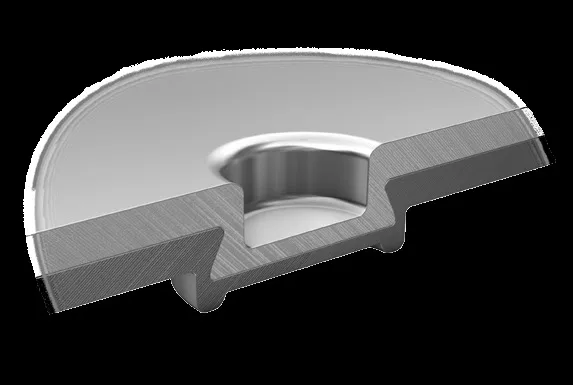
Clinching (also called press joining) unites two or more layers of sheet metal through a point formed directly in the material: the punch presses the sheets into the die, and the material flows and locks mechanically into a TOX point. The result is a permanent joint, with no melting and no added element.
A few principles from the TOX documentation:
- Joint strength increases, as a general rule, with the diameter of the point (for example a Ø 8 mm TOX point on DC01 material).
- The total joined thickness is calculated by layer: one thickness on the punch side (S1) and one on the die side (S2).
- For materials that tend to “cold weld” (aluminum, for example), stripper sleeves are used and, where needed, lubrication, to avoid dragging the material out during extraction.
Clinching vs. spot welding
| Criterion | TOX clinching | Spot welding |
|---|---|---|
| Source of the joint | Cold mechanical deformation | Melting through electrical heat |
| Filler material | None | None (but requires energy/electrodes) |
| Thermal effect | No heat, no thermal distortion | Locally heat-affected zone |
| Coated materials | The coating is not destroyed (galvanised, painted) | The coating can be damaged at the point |
| Dissimilar materials | Allowed (including dissimilar combinations) | Limited by weldability |
| Quality checking | Non-destructive (measuring the residual thickness) | Usually destructive (chisel test) |
The difference in checking is stated explicitly in the TOX documentation: for want of a better method, the quality of a weld is tested by destroying the joint; the quality of a TOX point can be verified non-destructively, by measuring the residual thickness of the material at the point.
When to choose clinching
TOX clinching is particularly advantageous when:
- You work with galvanised, painted or pre-coated sheet and want to keep the protective layer intact.
- You need to join dissimilar materials (steel to aluminum, for example) that would be difficult to weld.
- You want a heat-free process: no distortion, no fumes, no surface preparation by stripping the coating.
- You need fast, repeatable quality control in production.
Clinching also has material limits, per TOX documentation: each layer needs to be at least 0.2 mm thick, and the total joined thickness usually tops out around 12 mm. The ratio between the two thicknesses matters too: thick material over thin can go up to a 2.5:1 ratio, thin over thick up to 1:2. Outside these limits, check with us whether your application fits, based on a TOX-Test Report.
Joint variants and eClinching
TOX offers several joint types depending on the application: Round Joint (round die, TOX’s standard), SKB (moving-segment die, for complex applications or hybrid joining with an intermediate layer), and TWINpoint (two joining points at once, in a single press stroke). For applications where electrical conductivity between the materials matters (whether similar or dissimilar), the TOX documentation recommends Round Joint tooling, the basis of eClinching.
The right equipment
TOX points are produced with TOX presses and tongs, driven pneumo-hydraulically or electrically (ElectricDrive), at forces chosen according to the thickness and type of material. If you describe the materials, thicknesses and production volume, we will identify the right tool-and-press combination together.
See the complete TOX PRESSOTECHNIK press range →
Contact us for a TOX solution →
Source: TOX PRESSOTECHNIK technical documentation (“TOX-Clinching Technology — Installation and design guidelines,” data sheet 80.18; “Clinching Tools and Accessories,” data sheet 80.07). Updated: August 22, 2026.